







A Core Technology Is Unproven
You need to know whether a model, algorithm, workflow, integration or device can meet a specific requirement.


Trusted by Leading Enterprises
A proof of concept, or POC, is a small, focused build used to test whether a critical technical idea can work under defined conditions. It is designed to answer the riskiest question before a team funds an MVP, pilot or full product.
You need to know whether a model, algorithm, workflow, integration or device can meet a specific requirement.
You need to test availability, quality, access, labeling or coverage before committing to an AI or analytics build.
You want a controlled comparison of models, platforms, architectures or vendors against the same criteria.
A working result and scorecard will support an investment, roadmap, procurement or governance decision.
You need to expose security, performance, integration, cost or operational constraints early.

Primary Question
Can the critical idea work?
Typical audience
Technical and business decision-makers
Expected output
Focused working experiment, evidence and recommendation
Format
Primary Question
Can the critical idea work?
Typical audience
Technical and business decision-makers
Expected output
Focused working experiment, evidence and recommendation
Document the workflow, decisions, handoffs, exceptions and cost of the current state.
Identify candidate opportunities for automation, prediction, assistance or agentic execution.
Compare expected business impact with data, integration, governance and delivery complexity.
Assess what data exists, who owns it, how it can be accessed and what is missing.
Identify privacy, security, accuracy, human-approval and operational requirements.
Define the hypothesis, POC boundary, success measures, inputs and next decision.
A focused functional build or technical experiment that demonstrates the critical capability under agreed test conditions.
Results measured against the acceptance criteria, with baselines, assumptions and test coverage stated.
A concise assessment of technical viability, data readiness, dependencies, risks and known limitations.
The proposed production approach, integration pattern, security controls, monitoring needs and scalability considerations.
Prioritized scope, stages, dependencies, decision gates and delivery assumptions for a pilot, MVP or full product.
The agreed source code, setup instructions, technical notes and handover materials, with ownership defined in the engagement terms.

We keep the POC centered on the uncertainty that could change the investment decision, protecting speed and scope.

We connect the technical test to the workflow, decision, cost and outcome the organization actually cares about.

Validate models, applications, automations, integrations and data workflows with the disciplines required to build beyond the experiment.

We agree how the result will be judged before implementation, helping stakeholders interpret the evidence consistently.

We expose the security, scalability, integration, observability and operating requirements that a demo-only build can hide.

The output can be go, pivot or stop. The goal is to support the right decision, not to force every idea into full development.
Test grounded answers, retrieval quality, citations, permission-aware access, latency and cost using representative knowledge sources.
Evaluate bounded task execution, tool use, human approvals, traceability, recovery and exception handling.
Measure whether available data can support forecasting, scoring, anomaly detection or recommendations at a useful level.
Prove that APIs, legacy systems, platforms or devices can exchange data and complete a critical process reliably.
Validate a technically uncertain feature or architecture before it becomes part of the committed roadmap.
Test detection, extraction or classification quality on representative images, documents and edge cases.
Validate device connectivity, event handling, latency, data quality and the operational workflow around alerts or actions.
Test a migration pattern, performance target, service decomposition or platform capability before a broader transformation.


Best when the hypothesis, test conditions, deliverables and decision criteria can be defined clearly. Scope, timeline and price are agreed around that boundary.

Best when the idea is still broad, the right use case is unclear or data and architecture must be assessed before a build is scoped.

Best for organizations evaluating several related ideas or moving validated concepts through POC, pilot and MVP stages.
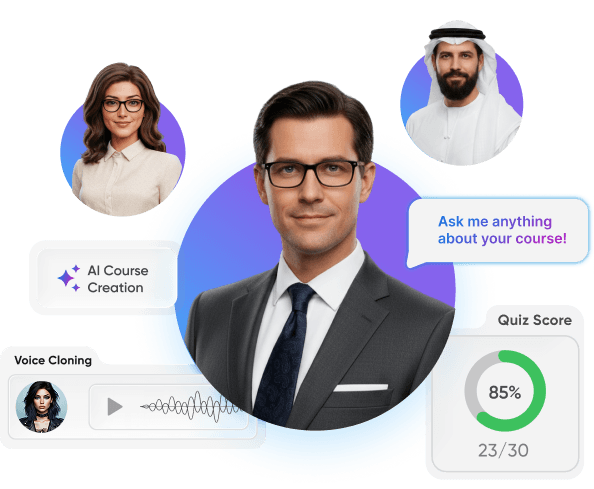
Vocaliv helps training institutes scale course delivery, reduce trainer workload, and launch new programs faster through AI-powered lesson planning, voice-based content creation, automated quizzes, and 24/7 student support.

Modern businesses lose countless opportunities simply because they cannot answer every incoming call. The AI Receptionist Platform solves this problem by providing businesses with a 24/7 intelligent voice assistant that answers calls instantly, manages bookings, and supports customers with natural conversations.

AB Ark built Angela, an AI voice assistant that answers UCLODIA’s website visitors, qualifies prospects, and books consultations in the same conversation, lifting visitor conversion from 2.4% to 8.1%.

AI4Real automates real estate marketing with intelligent video creation. It combines AI, property data analysis, and templates for agencies to create professional videos instantly.

AB Ark transformed Eventas AI into a self-operating ecosystem, replacing manual chaos with a high-precision AI Command Center.

Modern businesses often rely on multiple disconnected systems to manage tasks, communication, data, and workflows. The All-in-One Business Platform consolidates these essential tools into a single, centralized ecosystem that simplifies operations and enhances productivity across teams.

Acting CEO, Ebanah
“They work smartly.”

Director & Founder, Mahala Airtime
“This ownership mindset is rare in vendors.”
Founder & CEO, BrightWay AI
“Content creation time was reduced by 85%”

Director, SA Property Investors Network
“It's a game-changer.”

JOB SUCCESS

WORKING HOURS

HAPPY CLIENTS

PROFESSIONAL TEAM