






Operations
Monitor requests, gather context, coordinate handoffs, update systems and surface exceptions before they delay delivery.


Trusted by Leading Enterprises
Agentic AI is an AI system designed to achieve a goal with limited supervision. Instead of only generating an answer, it can interpret context, create a plan, use approved tools, take actions, check results and escalate exceptions to a person. The level of autonomy is defined by the workflow, risk and permissions you set.
Software that follows fixed rules you define in advance, running the same steps every time without judgment.
Example: process an incoming form
Match the rule
Check the file against a fixed template.
Run fixed steps
Copy values from mapped positions.
Stop on mismatch
Anything unexpected fails the run.
Hand to a person
Someone repeats the work manually.
From opportunity discovery to production operations, AB Ark builds agentic systems around a defined business goal, the tools required to complete it and the controls needed to run it safely.
The best agentic AI use cases are not simply repetitive. They involve changing inputs, multiple systems, decisions within policy and clear exceptions that should go to a person.
Monitor requests, gather context, coordinate handoffs, update systems and surface exceptions before they delay delivery.
Resolve routine cases end to end, retrieve account context, trigger approved actions and transfer sensitive or ambiguous issues with a complete summary.
Triage incidents, retrieve runbooks, coordinate diagnostics, draft remediation steps and execute pre-approved actions with full logging.
Research accounts, qualify inbound leads, prepare personalized outreach, update CRM records and prompt the right follow-up.

Extract and validate documents, prepare reconciliations, route anomalies and assemble approval-ready records without removing financial controls.
Search approved sources, synthesize evidence, prepare briefs and trigger next steps while preserving links to the underlying information.
Monitor requests, gather context, coordinate handoffs, update systems and surface exceptions before they delay delivery.
Resolve routine cases end to end, retrieve account context, trigger approved actions and transfer sensitive or ambiguous issues with a complete summary.
Triage incidents, retrieve runbooks, coordinate diagnostics, draft remediation steps and execute pre-approved actions with full logging.
Research accounts, qualify inbound leads, prepare personalized outreach, update CRM records and prompt the right follow-up.
Extract and validate documents, prepare reconciliations, route anomalies and assemble approval-ready records without removing financial controls.
Search approved sources, synthesize evidence, prepare briefs and trigger next steps while preserving links to the underlying information.

The agent receives a goal, user request or event and retrieves the information needed to interpret it.
It breaks the goal into tasks, selects the next action and adapts the plan as conditions change.
The agent queries permitted data sources, applications and APIs with least-privilege access.
It completes actions directly or delegates work to specialized agents when the architecture requires it.
It checks the result against defined rules, records what happened and routes uncertain or high-risk cases to a person.

Agents can use only the data, tools and actions required for their assigned role.

High-impact actions - such as payments, account changes or regulated decisions - pause for authorized review.

Approved knowledge sources, business rules and output constraints reduce unsupported or out-of-policy behavior.

Scenario testing covers expected cases, edge cases, prompt injection, tool misuse and recovery behavior.

Action logs, tool traces, version history and performance monitoring support investigation and improvement.

Architecture can support cloud, private-cloud, VPC, self-hosted or on-premise requirements based on the use case.
We believe a structured approach leads to better outcomes:


Explore our portfolio and client success stories where AB Ark AI engineers helped build
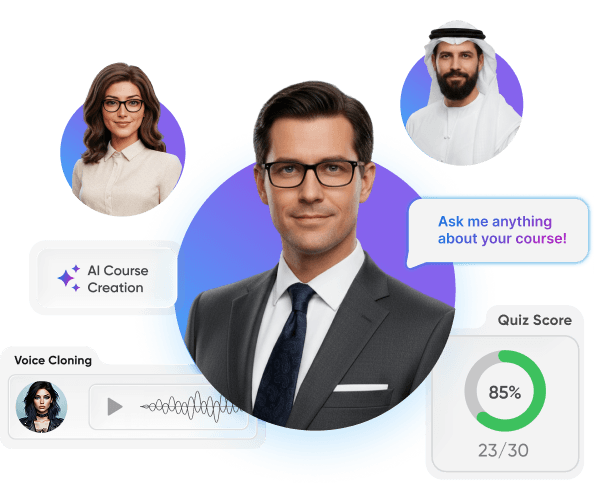
Vocaliv helps training institutes scale course delivery, reduce trainer workload, and launch new programs faster through AI-powered lesson planning, voice-based content creation, automated quizzes, and 24/7 student support.

Modern businesses lose countless opportunities simply because they cannot answer every incoming call. The AI Receptionist Platform solves this problem by providing businesses with a 24/7 intelligent voice assistant that answers calls instantly, manages bookings, and supports customers with natural conversations.

AI4Real automates real estate marketing with intelligent video creation. It combines AI, property data analysis, and templates for agencies to create professional videos instantly.

AB Ark transformed Eventas AI into a self-operating ecosystem, replacing manual chaos with a high-precision AI Command Center.

Modern businesses often rely on multiple disconnected systems to manage tasks, communication, data, and workflows. The All-in-One Business Platform consolidates these essential tools into a single, centralized ecosystem that simplifies operations and enhances productivity across teams.

QS Learning and Ab Ark built a Smart Online Academy, turning a traditional tutoring center into a seamless digital platform. With automated scheduling, an integrated classroom, and an SEO-optimized website, parents and students can easily find, book, and attend classes anytime.

CL Manager at Ebana

CEO at VYB Digital

CEO at Brightway

Director at SA Property Investors Network
CL Manager at Ebana
CEO at VYB Digital
CEO at Brightway
Director at SA Property Investors Network
Have questions? We've answered the most common queries to help you get started.

JOB SUCCESS

WORKING HOURS

HAPPY CLIENTS

PROFESSIONAL TEAM