


WhatsApp

Agentic AI Development for Intelligent Workflow Automation

Upwork
GoodFirm
Google
Clutch

Trusted by Leading Enterprises

Agentic AI Explained

What Is Agentic AI?

Agentic AI is an AI system designed to achieve a goal with limited supervision. Instead of only generating an answer, it can interpret context, create a plan, use approved tools, take actions, check results and escalate exceptions to a person. The level of autonomy is defined by the workflow, risk and permissions you set.

Rule-driven execution

What is traditional automation?

Software that follows fixed rules you define in advance, running the same steps every time without judgment.

  • Predictable within known cases
  • Needs a rule for every exception

Example: process an incoming form

  1. 1

    Match the rule

    Check the file against a fixed template.

  2. 2

    Run fixed steps

    Copy values from mapped positions.

  3. 3

    Stop on mismatch

    Anything unexpected fails the run.

  4. 4

    Hand to a person

    Someone repeats the work manually.

What we build

Our Agentic AI Development Services

Agentic AI Strategy and Use-Case Discovery

Agentic AI Strategy and Use-Case Discovery

Identify high-value workflows, assess data and integration readiness, compare build-versus-buy options, and define an adoption roadmap tied to measurable outcomes.

Custom AI Agent Development

Custom AI Agent Development

Build goal-driven agents that reason over business context, use approved tools and complete tasks within clear permission boundaries.

Agentic Workflow Automation

Agentic Workflow Automation

Automate variable, multi-step processes that span documents, decisions, handoffs and business applications - beyond rigid if-this-then-that rules.

Multi-Agent System Development

Multi-Agent System Development

Design coordinated agents with specialized roles when one agent cannot reliably manage the full workflow. Orchestration, shared context and conflict handling are built into the architecture.

Enterprise Knowledge and Agentic RAG

Enterprise Knowledge and Agentic RAG

Use retrieval-augmented generation (RAG) to ground agent decisions in approved documents, databases and knowledge bases so responses and actions use current, relevant business information.

AI Agent Integration

AI Agent Integration

Connect agents to CRM, ERP, helpdesk, collaboration, analytics and proprietary systems through secure APIs, event triggers and governed tool access.

Agent Evaluation, Guardrails and Governance

Agent Evaluation, Guardrails and Governance

Define test cases, approval gates, confidence thresholds, access policies, audit trails and fallback behavior before production rollout.

AgentOps, Monitoring and Optimization

AgentOps, Monitoring and Optimization

Monitor quality, latency, cost, tool failures, escalations and business outcomes. Improve prompts, workflows, retrieval and model routing using reviewed production feedback.

Where Agent Create Value

Automate Work That Requires Context, Coordination and Action

Full Stack Icon

Operations

Monitor requests, gather context, coordinate handoffs, update systems and surface exceptions before they delay delivery.

Customer Service

Resolve routine cases end to end, retrieve account context, trigger approved actions and transfer sensitive or ambiguous issues with a complete summary.

Sales and Revenue Operations

Research accounts, qualify inbound leads, prepare personalized outreach, update CRM records and prompt the right follow-up.

Finance and Back Office

Extract and validate documents, prepare reconciliations, route anomalies and assemble approval-ready records without removing financial controls.

IT and Engineering

Triage incidents, retrieve runbooks, coordinate diagnostics, draft remediation steps and execute pre-approved actions with full logging.

Knowledge Work

Search approved sources, synthesize evidence, prepare briefs and trigger next steps while preserving links to the underlying information.

From Goal to Verified Action

How Does an Agentic AI System Work?

  • 1

    Understand the goal and context

    The agent receives a goal, user request or event and retrieves the information needed to interpret it.

  • 2

    Create a plan

    It breaks the goal into tasks, selects the next action and adapts the plan as conditions change.

  • 3

    Use approved knowledge and tools

    The agent queries permitted data sources, applications and APIs with least-privilege access.

  • 4

    Act and coordinate

    It completes actions directly or delegates work to specialized agents when the architecture requires it.

  • 5

    Verify, log and escalate

    It checks the result against defined rules, records what happened and routes uncertain or high-risk cases to a person.

Our Process

Our AI Agent Implementation Process

1
Discover and Prioritize

Discover and Prioritize

Map candidate workflows, define the business goal, score feasibility and risk, and select a use case with a clear path to value.

2
Design the Agentic Architecture

Design the Agentic Architecture

Define agent roles, tools, memory, retrieval, orchestration, permissions, approval points and failure handling.

3
Prototype and Establish Evaluations

Prototype and Establish Evaluations

Build a focused proof of concept and a repeatable test suite using representative scenarios and acceptance thresholds.

4
Develop and Integrate

Develop and Integrate

Connect the agent to approved data and systems, implement guardrails, and test each tool and handoff.

5
Validate and Roll Out Safely

Validate and Roll Out Safely

Run offline and supervised tests, deploy to a controlled group, monitor outcomes and expand autonomy only when performance supports it.

6
Operate and Improve

Operate and Improve

Track quality, cost, latency and business results; review failures; and update the system through governed releases.

Controlled Autonomy

Secure, Observable and Human-Governed by Design

Autonomy should be earned, not assumed. We match each agent's permissions and oversight to the risk of the action it performs.

Least-Privilege Access

Agents can use only the data, tools and actions required for their assigned role.

Add Profile Plus

Human Approval Gates

High-impact actions - such as payments, account changes or regulated decisions - pause for authorized review.

Threat Warn Alarm

Grounding and Policy Controls

Approved knowledge sources, business rules and output constraints reduce unsupported or out-of-policy behavior.

Customizable Targets Icon

Evaluation and Red-Team Testing

Scenario testing covers expected cases, edge cases, prompt injection, tool misuse and recovery behavior.

Auditability and Observability

Action logs, tool traces, version history and performance monitoring support investigation and improvement.

Data Collection Icon

Data and Deployment Controls

Architecture can support cloud, private-cloud, VPC, self-hosted or on-premise requirements based on the use case.

Our Tech Stack

Agentic AI Technology Selected for Your Requirements

We select technology based on what your product needs, not what we prefer. Our engineers work across modern frontend frameworks, backend runtimes, databases, and cloud platforms.

OpenAI
OpenAI
Anthropic Claude
Anthropic Claude
Google Gemini
Google Gemini
Meta Llama
Meta Llama
Mistral
Mistral
Success Stories

What Our Clients Are Saying

M. Salim

M. Salim

CL Manager at Ebana

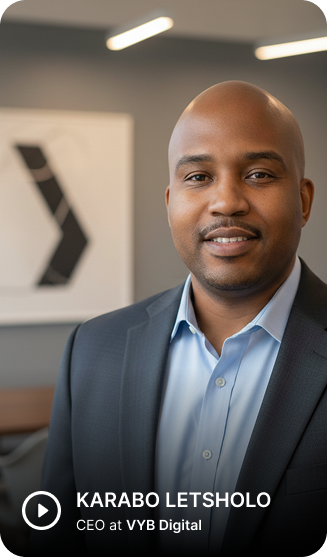
Karabo Letsholo

Karabo Letsholo

CEO at VYB Digital

Zach Wagner

Zach Wagner

CEO at Brightway

Andrew Walker

Andrew Walker

Director at SA Property Investors Network

FAQs

Frequently Asked Questions

Agentic AI development services cover the strategy, design, engineering, integration, testing, deployment and operation of AI systems that can pursue goals and complete multi-step tasks using approved data and tools. A complete engagement also defines guardrails, human approval points and measurable success criteria.
A chatbot primarily exchanges messages. An agentic AI system can plan and take actions across connected tools. For example, a chatbot may explain an onboarding process, while an agent can collect the required information, update the CRM, schedule the next step and escalate an exception.
Traditional automation follows predefined rules and works well for predictable processes. Agentic AI is better suited to workflows with changing inputs, context-dependent decisions and multiple possible paths. Many production solutions combine both: deterministic automation for fixed controls and agents for variable work.
Strong candidates have a clear goal, repeat frequently, require information from several sources, involve bounded decisions and produce an outcome that can be measured. Processes with undefined accountability, inaccessible data or unacceptable action risk should be improved before automation.
Not always. A single well-designed agent is usually easier to test, secure and operate. Multi-agent systems make sense when the workflow contains distinct roles, parallel tasks or specialized knowledge that cannot be handled reliably by one agent. Architecture should follow the problem, not the trend.
Yes, when those systems provide suitable APIs, events, databases or controlled user interfaces. Agents can be integrated with CRM, ERP, helpdesk, collaboration, analytics and proprietary platforms while preserving existing approval and access policies.
Security starts with scoped identities and least-privilege access. We add approved knowledge sources, input and output controls, human approval gates, audit logs, monitoring, test suites and fallback behavior. The exact controls depend on the data, actions and regulatory context involved.
Only as much as the workflow and evidence justify. Low-risk, reversible tasks may run automatically. High-impact, irreversible or regulated actions should require human approval. Autonomy can expand gradually as evaluation and production monitoring demonstrate reliable performance.
Timing depends on workflow complexity, data readiness, integrations, security requirements and the number of agent roles. A focused discovery and pilot should come before wider rollout. After reviewing the use case, AB Ark can provide a phased scope, timeline and delivery plan.
Cost is driven by discovery, integrations, data preparation, evaluation depth, security, deployment model, usage volume and ongoing operations. We scope the smallest useful pilot first, then estimate production and operating costs using the evidence gathered.
JOB SUCCESS

99%

JOB SUCCESS

WORKING HOURS

15000+

WORKING HOURS

HAPPY CLIENTS

500+

HAPPY CLIENTS

PROFESSIONAL TEAM

80+

PROFESSIONAL TEAM

GoogleUpworkGoodFirmClutch

Let’s bring your vision to life

Attachments